
Digital Justice Fellow

Senior Researcher and Statistician
In the early morning of August 7, 2020, Black Lives Matter activist Derrick Ingram was sleeping in his Manhattan apartment when he was woken up by knocking at the door.2Id. Dozens of police officers in riot gear had surrounded his home and were banging on his door as helicopters circled overhead, drones hovered near his windows, and police dogs waited outside.3Liam Stack, Annie Correal, & Juliana Kim, N.Y.P.D. Besieges a Protest Leader as He Broadcasts Live, N.Y. Times (last updated Aug. 9, 2020), https://www.nytimes.com/2020/08/07/nyregion/nypd-derrick-ingram-protester.html. Ingram started to stream the standoff on Instagram Live.4Green, supra note 1.
For approximately the next five hours, police officers demanded entry into Ingram’s apartment without presenting a warrant. Thanks to Ingram’s broadcast on social media, protesters began congregating outside his apartment building. The police ultimately left without making an arrest.5Id. A New York City Police Department (NYPD) spokesperson later stated that the police were at Ingram’s apartment to arrest him on charges that he had allegedly assaulted a police officer at a Black Lives Matter protest in June by yelling into her ear with a megaphone.6Stack et al., supra note 3. The next day, Ingram turned himself in to the police.7Green, supra note 1. The charges were dismissed in May 2021, nearly a year later.8Id.
The NYPD later confirmed that they had used facial recognition software to aid in the investigation that led to the siege on Ingram’s apartment.9George Joseph & Jake Offenhartz, NYPD Used Facial Recognition Technology In Siege Of Black Lives Matter Activist’s Apartment, Gothamist (Aug. 14, 2020), https://gothamist.com/news/nypd-used-facial-recognition-unit-in-siege-of-black-lives-matter-activists-apartment. A police spokesperson said, “The NYPD uses facial recognition as a limited investigative tool, comparing a still image from a surveillance video to a pool of lawfully possessed arrest photos.”10Id. However, reporters at Gothamist noted that the NYPD’s photo of Ingram appeared to have been taken from his Instagram page.11Id.
NYPD has left. Still no warrant provided. https://t.co/mVcDmcaX8n
— Warriors in The Garden (@WarriorsITG) August 7, 2020
This shocking case illustrates the central role that social media plays in organizing, political expression, government surveillance, and the criminalization of public speech. In many ways, social media functions as a modern-day “public square,” a primary venue for public discourse, social connection, news consumption, and organizing. However, social media is distinct from a traditional public square in that it is governed by private companies that set rules, monitor activity, and share data on user behavior. This private content moderation shapes what type of speech is legitimized and who is subjected to disproportionate scrutiny.12Sarah Myers West, Censored, suspended, shadowbanned: User interpretations of content moderation on social media platforms, 20 New Media & Soc’y 4366–83 (2018), https://journals.sagepub.com/doi/10.1177/1461444818773059. Government agencies also regulate social media use by purchasing and monitoring user data.13Jeramie D. Scott, Social Media and Government Surveillance: The Case for Better Privacy Protections for Our Newest Public Space, 12 J. Bus. & Tech. L. 151–63 (2017), https://digitalcommons.law.umaryland.edu/cgi/viewcontent.cgi?article=1272&context=jbtl; Matthew Tokson, Government Purchases of Private Data, 59 Wake Forest L. Rev. 269-324 (2024), https://www.wakeforestlawreview.com/wp-content/uploads/2024/10/Tokson_Final.pdf. As social media increasingly becomes a site of mass surveillance, it is likely that users will face greater criminalization based on their online activity and greater censorship of online political expression (via both self-censorship and content removal by platforms).14Scott, supra note 13. For Black people and other marginalized communities, social media surveillance reflects and reinforces longstanding patterns of racialized offline surveillance, with dangerous implications for equity related to political expression, criminalization, and participation in civic discourse.
This Brief opens with background information on social media platforms, their revenue structures, and the data they collect on users. Part II then discusses how the government accesses social media data. This sets the groundwork for an analysis in Part III of how social media activity is regulated and criminalized via privately governed content moderation processes and state-led surveillance and criminalization practices. This section also presents examples of how Black communities and other marginalized groups, including protesters, immigrants, and Black youth, are heavily targeted by social media monitoring. The Brief closes by sharing the crucial next steps to secure and protect the foundation of free discussion necessary for a just society and multiracial democracy.
Social media platforms are privately owned digital services, such as Instagram, Facebook, TikTok, and X (formerly Twitter), that allow their billions of users to create and share content, communicate with others, and participate in digital public life. While these platforms are free to join and use, the companies behind them make profits primarily by collecting and selling detailed data about user behavior, most visibly through targeted advertising.15Conor Clune & Emma McDaid, Content moderation on social media: constructing accountability in the digital space, 37 Acct. Audit. & Accountability J. 257–79 (2024), https://doi.org/10.1108/AAAJ-11-2022-6119; Barrie Sander, Democratic Disruption in the Age of Social Media: Between Marketized and Structural Conceptions of Human Rights Law, 32 Eur. J. Int’l L. 159–93 (2021), https://doi.org/10.1093/ejil/chab022.
Social media platforms can store users’ personal data indefinitely, and the data can legally be gathered by or shared with third parties—including government agencies and their contractors—without a user’s knowledge.16Hannah Bloch-Wehba, Content Moderation as Surveillance, 36 Berkeley Tech. L.J. 1297-340 (2022), https://scholarship.law.tamu.edu/facscholar/1662/; Joseph Turow, Michael Hennessy, & Nora A. Draper, The Tradeoff Fallacy, Dep’t. Papers, Annenberg Sch. for Commc’n (2015), http://fs.hubspotusercontent00.net/hubfs/32152/UPenn_TradeoffFallacy.pdf; Larissa Aldehoff, Meri Dankenbring, & Christian Reuter, Renouncing Privacy in Crisis Management? People’s View on Social Media Monitoring and Surveillance, Universitat Politecnica de Valencia ISCRAM 2019 Proceedings 1184–97 (May 22, 2019), https://iscram2019.webs.upv.es/wp-content/uploads/2019/09/ISCRAM2019_Proceedings.pdf. As daily life and expression increasingly occur online, the same surveillance infrastructure that has historically targeted Black political activists now converts everyday online activity into material for monitoring, with implications for broad law enforcement databases and watchlists, immigration determinations, and criminal investigations.17Bloch-Wehba, supra note 16; Bruce Arrigo & Olivia P. Shaw, The de-realization of Black bodies in an era of mass digital surveillance: A techno-criminological critique, 27 Theoretical Criminology (2023), https://doi.org/10.1177/13624806221082318; Amith Gupta et al., Spying on the Margins: The History, Law, and Practice of U.S. Surveillance Against Muslim, Black, and Immigrant Communities and Contemporary Strategies of Resistance, Project South (2021), https://projectsouth.org/wp-content/uploads/2021/04/FINAL-Project-South_Spying-on-the-Margins_04.26.2021.pdf. Scholars have documented how the long pattern of surveillance and criminalization of Black people through whatever technology is available at the time, from the Federal Bureau of Investigation (FBI) COINTELPRO wiretaps to today’s social media monitoring, reflects an evolving struggle for Black expression, organizing, self-determination, and freedom.18Stuart Hall et al., Policing the Crisis: Mugging, the State, and Law and Order (Macmillan Press Ltd., 1978), https://sociologytwynham.com/wp-content/uploads/2014/10/policing-the-crisis.pdf; Arrigo & Shaw, supra note 17.
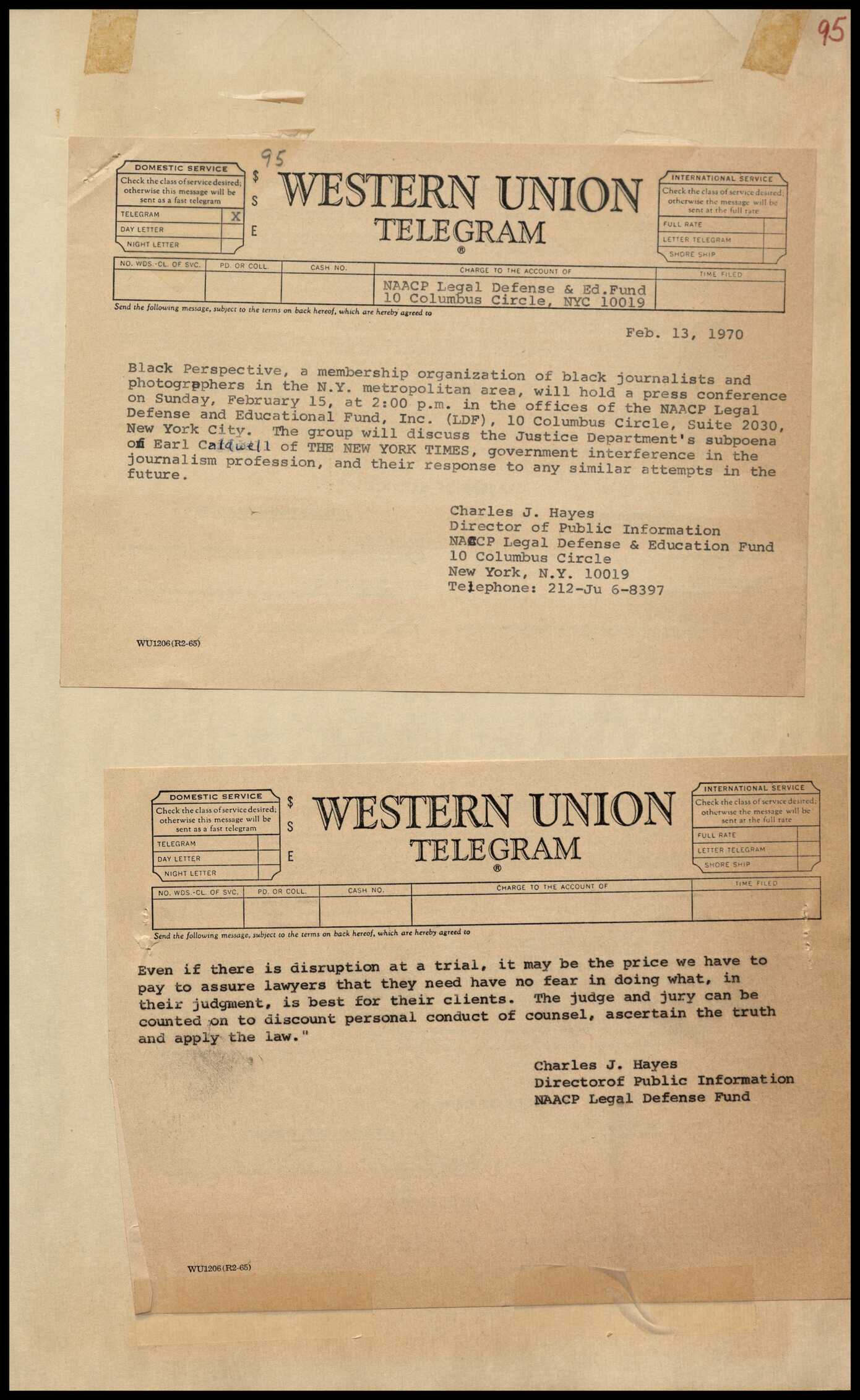
The government’s use of surveillance to target Black political activists and leaders has historically led to wrongful prosecutions. Bobby Seale, co-founder of the Black Panther Party, was under intensive FBI COINTELPRO surveillance when he was accused of conspiracy to cross state lines with intent to incite a riot. Seale lacked legal representation during the infamous “Chicago Eight” trial, and the judge ordered him bound, gagged, and chained to his chair in court.19Pnina Lahav, The Chicago Conspiracy Trial: Character and Judicial Discretion, 71 U. Colo. L. Rev. (2000), https://scholarship.law.bu.edu/faculty_scholarship/2200/. The Legal Defense Fund (LDF) defended Seale in subsequent proceedings, and the conspiracy charge was ultimately dropped.20Press Release, NAACP Legal Def. Fund, LDF to Defend Bobby Seale (1970), https://ldfrecollection.org/archives/archives-search/archives-item/64be91ee-9f12-44e9-989c-4d4b1e7e101a/ldf-to-defend-bobby-seale; Charges are Dropped Against Bobby Seale, Harv. Crimson (1970), https://www.thecrimson.com/article/1970/10/21/charges-are-dropped-against-bobby-seale/. Such historic cases illustrate patterns being repeated through social media surveillance today, in that the surveillance of Black political organizing continues to shape prosecutions and destroy lives.




Registering for an account on most social media platforms requires submitting personal information, such as a name, email address, date of birth, and phone number, and increasingly, verification of real-world identity. As of 2025, roughly half of U.S. states required some form of user age verification for online platforms, with a growing number specifically requiring social media users to submit government-issued identification or biometric facial scans as a condition of access.21Rindala Alajaji, The Year States Chose Surveillance Over Safety: 2025 in Review, Elec. Frontier Found.: Deeplinks Blog (Jan. 1, 2026), https://www.eff.org/deeplinks/2025/12/year-states-chose-surveillance-over-safety-2025-review; Note, Content Neutrality for Kids: Intermediate Scrutiny for Social Media Age-Verification Laws, 139 Harv. L. Rev. 942 (2026), https://harvardlawreview.org/print/vol-139/content-neutrality-for-kids-intermediate-scrutiny-for-social-media-age-verification-laws/. While heralded as a strategy to protect minors, these requirements broaden the sensitive data that platforms collect—such as home address, license number, and biometric information—and leave users more vulnerable to data breaches and government targeting.22Jason Kelley, Hack of Age Verification Company Shows Privacy Danger of Social Media Laws, Elec. Frontier Found.: Deeplinks Blog (Jun. 26, 2024), https://www.eff.org/deeplinks/2024/06/hack-age-verification-company-shows-privacy-danger-social-media-laws.
Civil liberties organizations have raised concerns that these requirements expand the scope of surveillance. They argue that tying digital participation to verifiable offline identity effectively eliminates online privacy, anonymity, and safety, particularly for communities that already face government targeting based on their social identities or political beliefs.23Alajaji, supra note 21. Even without a legal name, a social media account generates sensitive identifying data: when taken together, information such as device identifiers, IP addresses, photos, follower networks, and geolocation signals can easily connect online activity to a specific person and their offline behaviors, locations, and social networks.24Bloch-Wehba, supra note 16. As described below, there is broad discretion in how law enforcement acquires and uses such social media data.
On a basic level, law enforcement agencies can and do monitor public social media content directly. They may search user profiles, create fake accounts, send friend requests, monitor locations and hashtags, and map social networks without any formal processes or warrants.25Scott, supra note 13; Bloch-Wehba, supra note 16. For example, the Minnesota Department of Human Rights determined that between 2010 and 2020, the Minneapolis Police Department used fake Facebook accounts to surveil and deceptively engage with Black individuals and organizations such as the NAACP and the National Urban League, unrelated to any specified criminal investigation.26Minn. Dep’t H.R., Investigation into the City of Minneapolis and the Minneapolis Police Department (Apr. 27, 2022), https://mn.gov/mdhr/assets/Investigation%20into%20the%20City%20of%20Minneapolis%20and%20the%20Minneapolis%20Police%20Department_tcm1061-526417.pdf.
Law enforcement agencies can also compel social media platforms to disclose user data without a warrant or probable cause, which is happening on a large and growing scale. With as little as an administrative subpoena written by the agency without judicial review, law enforcement agencies can submit formal legal requests to platforms for stored user data, including public posts as well as private data such as account information, legal name, credit card information, email address, IP addresses, location history, and network connections.27Information for law enforcement authorities, Safety Center, Meta (last visited Oct. 27, 2026), https://www.meta.com/safety/communities/law/guidelines/?srsltid=AfmBOooQra9dq5BgZgojHpUTiUzfh4SbDq77OAIEuOhwgy6YoZNd3cMs; Office Legal Pol’y, U.S. Dep’t. Just., Report to Congress on the Use of Administrative Subpoena Authorities by Executive Branch Agencies and Entities (last visited Nov. 4, 2026); Scott, supra note 13; Bloch-Wehba, supra note 16; Vaishali Nambiar, Watching and Waiting: Modern Social Media Surveillance of Immigrants and Fourth Amendment Implications, 77 Fed. Comm. L.J. (2025), http://www.fclj.org/volumes/volume-77-2024-2025-issue-2-2/. For more detailed records, such as contents of private messages and photos, Meta requires a warrant with probable cause.28Meta, supra note 27. In 2025, government authorities in the United States submitted more than 161,000 user data requests to Meta and received data in eighty-eight percent of cases.29Government Requests for User Data, United States of America, Transparency Center, Meta (last visited Oct. 27, 2026) https://transparency.meta.com/reports/government-data-requests/country/US/. The volume of such requests has grown dramatically over the past decade, and law enforcement requests that successfully resulted in data disclosures increased by approximately 675% at Meta and 530% at Google between 2014 and 2024.30Id.; Government requests to remove content, Google (last visited Oct. 27, 2026), https://transparencyreport.google.com/government-removals/overview?hl=en; Richie Koch, Authorities worldwide can see more than ever, with Big Tech as their eyes, Proton (Feb. 27, 2025), https://proton.me/blog/big-tech-data-requests-surge.
The data generated through social media engagement thus flows directly into surveillance infrastructure, converting everyday online activity into material that impacts commercial exploitation, law enforcement investigations and watchlists, and immigration determinations.31Jennifer Earl, Thomas V. Maher, & Jennifer Pan, The digital repression of social movements, protest, and activism: A synthetic review, 8 Sci. Adv. (2022), https://doi.org/10.1126/sciadv.abl8198; Desmond Upton Patton et al., Stop and Frisk Online: Theorizing Everyday Racism in Digital Policing in the Use of Social Media for Identification of Criminal Conduct and Associations, Soc. Media + Soc’y 1-10 (2017), https://doi.org/10.1177/2056305117733344.
Beyond direct monitoring or formal requests involving administrative subpoenas or warrants, the government can also buy social media data without judicial oversight or safeguards, such as through commercial data brokers.32Scott, supra note 13; Bloch-Wehba, supra note 16. The commercial data market allows government actors to purchase data and detailed personal information that they could not legally collect themselves.33Emile Ayoub & Elizabeth Goitein, Closing the Data Broker Loophole, Brennan Ctr. Just (Feb. 13, 2024), https://www.brennancenter.org/our-work/research-reports/closing-data-broker-loophole. This is often referred to as the “data broker loophole.”34Id. In 2025, Montana became the only state to enact legislation that narrows the data broker loophole by prohibiting its own state and local government entities from purchasing sensitive data and electronic communications without a warrant or investigative subpoena.35S.B. 282, 69th Leg., Reg. Sess. (Mont. 2025); Matthew Guariglia, Montana Becomes First State to Close the Law Enforcement Data Broker Loophole, Elec. Frontier Found.: Deeplinks Blog (May 14, 2025), https://www.eff.org/deeplinks/2025/05/montana-becomes-first-state-close-law-enforcement-data-broker-loophole. There are no federal laws preventing or regulating the government’s purchase of data through data brokers, and the increasingly detailed personal records that social media generates are available to the government with minimal constitutional constraints.36Carey Shenkman et al., Legal Loopholes and Data for Dollars: How Law Enforcement and Intelligence Agencies Are Buying Your Data from Brokers, Ctr. Demo. & Tech. (2021), https://doi.org/10.31219/osf.io/p3aqk; Bloch-Wehba, supra note 16.
Data brokers, such as LexisNexis and Acxiom, specialize in compiling enormous amounts of personal information from a wide range of sources, including social media.37Shenkman et al., supra note 36; Bloch-Wehba, supra note 16; Jay Stanley, Data Brokers Release Information About Their Operations In Response to Congressional Inquiry, ACLU (Nov. 9, 2012), https://www.aclu.org/news/privacy-technology/data-brokers-release-information-about-their-operations. Commercial databases paint highly specific pictures of individuals by combining social media information with other personal details, such as GPS location, browsing history, online purchasing behavior, criminal history, medical history, and mental health records.38Drew Harwell, Now for sale: Data on your mental health, Wash. Post (Feb. 13, 2023) http://washingtonpost.com/technology/2023/02/13/mental-health-data-brokers/; Shenkman et al., supra note 36.
A review of approximately 150 publicly available government contracts found strong evidence that federal agencies routinely exploit this data broker loophole to obtain location data, social media activity information, and other sensitive personal information.39Shenkman et al., supra note 36; Elec. Frontier Found., US Border-Homeland Security Tech Vendors Dataset (dataset updated Jan. 2026), https://www.eff.org/document/us-border-homeland-security-tech-vendors-dataset. This practice often targets Black people, immigrants, and other marginalized groups.40Shenkman et al., supra note 36. U.S. Immigration and Customs Enforcement (ICE) reportedly signed a roughly $10 million contract with data broker ThunderCat Technology LLC to purchase records related to immigrants’ Individual Taxpayer Identification Numbers, which many undocumented individuals use to file taxes.41Joseph Cox, ICE Appears to Be Buying Immigrants’ Tax Identifiers from a Data Broker, 404 Media (Jun. 17, 2026), https://www.404media.co/ice-appears-to-be-buying-immigrants-tax-identifiers-from-a-data-broker/. Despite a court order banning ICE from sourcing this information directly, the agency used the loophole to purchase the sensitive information.42Id. ICE skirted legal restrictions to purportedly combat “fraud,” such as investigating Somali immigrants in Minnesota.43Id. Although Congress introduced bipartisan legislation in 2026 to target this data broker loophole, such as by requiring a warrant, stronger civil rights protections are needed to rein in the abusive surveillance practices associated with the government’s use of social media data and other sensitive data.44Press Release, Ron Wyden United States Senator for Oregon, Wyden, Lee, Davidson and Lofgren Introduce Bill to Reform FISA Section 702, Protect Americans’ Constitutional Rights and Plug Data Broker Surveillance Loophole (Mar. 12, 2026) https://www.wyden.senate.gov/news/press-releases/wyden-lee-davidson-and-lofgren-introduce-bill-to-reform-fisa-section-702-protect-americans-constitutional-rights-and-plug-data-broker-surveillance-loophole.
As discussed above, social media differs from the traditional “public square” in that it is regulated by private entities driven by profit motives. These private entities, which face limited government regulation, set the policies that determine what online speech is legitimized and which users are subjected to disproportionate scrutiny. The regulation of online speech is inseparable from the longer history of the regulation and control of public space, political speech, and the conditions of Black life in the United States. Content moderation refers to the processes platforms use to decide which content and accounts are allowed, restricted, or removed.45West, supra note 12. Every major social media platform moderates content, and there is value in the practice, as removing targeted hate speech, coordinated harassment, and child exploitation materials can serve real safety interests. But despite the value of content moderation, fundamental questions remain: who decides what counts as harmful, whose cultural knowledge shapes those judgments, and whose communities absorb the costs when the systems get it wrong?
Scholars have documented that digital surveillance systems convert Black political identity into a threat to be monitored and contained, rather than an identity to be protected, in a process that dehumanizes and dehumanizes the lived experience of Blackness.46Arrigo & Shaw, supra note 17. Content moderation is one of the mechanisms through which this flattening of identity and expression happens.
To moderate millions of posts per day, platforms rely on artificial intelligence (AI) and automated tools to identify rule violations and generate enforcement actions before any human reviewer is involved.47Robert Gorwa, Reuben Binns, & Christian Katzenbach, Algorithmic content moderation: Technical and political challenges in the automation of platform governance, 7 Big Data & Soc’y 1–15 (2020), https://doi.org/10.1177/2053951719897945. The inner workings of these systems, such as the rules embedded in them, the data used to train them, and how they perform across different populations, are treated as proprietary information and are kept from the public.48Id.
Research consistently shows that social media platforms heavily police Black speech, insufficiently protect Black communities from targeted hate speech, and build the systems governing online expression without meaningful input from the people most affected by their failures.49Oliver L. Haimson et al., Disproportionate Removals and Differing Content Moderation Experiences for Conservative, Transgender, and Black Social Media Users: Marginalization and Moderation Gray Areas, 5 Proc. ACM Human-Computer Interaction 1–35 (2021), https://doi.org/10.1145/3479610; Eugenia Siapera, AI Content Moderation, Racism and (de)Coloniality, Int’l J. of Bullying Prevention 55–65 (2022), https://doi.org/10.1007/s42380-021-00105-7. While some enforcement actions target genuinely harmful content, enforcement also frequently targets Black users’ tone and expressions of identity and lived experience as violations of platform guidelines.50Id. Black social media users posting about racial justice, racism, or their own experiences of discrimination are among the users most likely to have their content flagged and removed by both human and automated systems, despite following platform guidelines.51Haimson et al., supra note 49; Cinoo Lee et al., People who share encounters with racism are silenced online by humans and machines, but a guideline-reframing intervention holds promise, 121 Proc. Nat’l Acad. Sci. 1–12 (2024), https://doi.org/10.1073/pnas.2322764121. Research examining what drives flagging decisions by humans found that reviewers apply greater scrutiny to the emotional tone of posts about racial discrimination than to posts about other negative experiences, using the anger or distress expressed in a post as grounds for removal.52Lee et al., supra note 51. Human reviewers flagged racial discrimination disclosures at nearly three times the rate of comparable posts about non-racial negative experiences, and the human capacity to read context did not prevent flagging.53Id. The same study found that automated systems’ ability to accurately flag content varied by model. Five widely used automated moderation algorithms, including the most recent large language models (such as ChatGPT), all disproportionately flagged posts in which users described their own experiences of racial discrimination, compared to posts with similar levels of negative emotion and profanity that did not involve race.54Id.
The fact that both automated systems and human reviewers disproportionately flag Black speech reflects a deeper cultural problem: the racial hierarchies that have historically constructed Black political expression as toxic or dangerous are programmed into content moderation rules, automated systems, and the people who enforce them.55Hall et al., supra note 18; Arrigo & Shaw, supra note 17; Safiya Umoja Noble, Algorithms of Oppression: How Search Engines Reinforce Racism (NYU Press, 2018).
This erasure and rejection of lived experience can negatively affect how Black people perceive their right to exist freely online, with the harms extending beyond the person whose post is removed.56Lee et al., supra note 51. In a controlled experiment on a simulated hyperlocal social platform, Black participants who saw that a post about racial discrimination was flagged for removal reported a weaker sense of connection to the community and less willingness to use the platform than those who saw the same post left unflagged. In this way, content moderation can cause indirect harm for users who witness the direct silencing of others based on racialized moderation rules.57Id.
Research suggests that Black women are the most impacted by social media platforms’ over-enforcement and under-protection. In two online experiments, participants of different racial and gender backgrounds were shown a post pushing back against ignorance about white privilege, made by a profile showing either a Black man, Black woman, white man, or white woman.58Ian Hawkins et al., Race and gender intertwined: why intersecting identities matter for perceptions of incivility and content moderation on social media, 73 J. Comm. 539–51 (2023), https://doi.org/10.1093/joc/jqad023. Across participant demographics, white men were the most likely to flag the content as uncivil and report it for removal, and this happened most often when the post was by a Black woman, regardless of tone.59Id. This pattern, which is reflected in other research, is often referred to as algorithmic misogynoir: the compounding impact of racial and gender bias in moderation systems and user behavior, leading to the policing and silencing of Black women’s voices and online presence.60Brandeis Marshall, Algorithmic misogynoir in content moderation practice, Heinrich-Böll-Stiftung (2021), https://eu.boell.org/sites/default/files/2021-06/HBS-e-paper-Algorithmic-Misogynoir-in-Content-Moderation-Practice-200621_FINAL.pdf.
These enforcement disparities are worsened by automated systems’ limitations in recognizing and accurately interpreting language. Moderation algorithms trained primarily on standard American English systematically flag African American Vernacular English (AAVE) as abusive at higher rates, indicating that the way Black communities communicate is itself treated as a violation of platform rules.61Maarten Sap et al., The Risk of Racial Bias in Hate Speech Detection, Proc. 57th Ann. Meeting Ass’n Computational Linguistics 1668–78 (2019), https://doi.org/10.18653/v1/P19-1163. Research documents that common terms in AAVE, including “imma” or “dope ass,”i“Dope ass” can refer to something being cool or great, e.g., “That is a dope ass car.” are associated with hate speech, threats, or toxic language by these systems despite having neutral or positive meanings, and that content expressed in AAVE is flagged as toxic at more than twice the rate of its standard English equivalent.62Id.; Haimson et al., supra note 49; Anna Woorim Chung, How Automated Tools Discriminate Against Black Language, MIT Civic Media: Blog (Jan. 24, 2019), https://civic.mit.edu/index.html%3Fp=2402.html.
The effect is cumulative: Black users have adapted by using coded language, emojis, and backup accounts simply to maintain access to online spaces that should be freely available to them, workarounds that signal how deeply content moderation inequities have become embedded in Black digital life.63Haimson et al., supra note 49. Without proper cultural context, content moderation subjects Black people and other marginalized communities to unfair and imbalanced enforcement and deprives them of their right to political and cultural expression and protection from harassment.64Transparency Center, Meta, Emojis Targeting Black People Bundle (last updated Apr. 10, 2026), https://transparency.meta.com/oversight/oversight-board-cases/emojis-targeting-black-people/.
The unfair enforcement against Black users is reflected in internal research conducted at Meta, which found that Black Instagram users were fifty percent more likely than white users to have their accounts disabled by the platform’s automated systems.65Olivia Solon, Facebook ignored racial bias research, employees say, NBC News (Jul. 23, 2020), https://www.nbcnews.com/tech/tech-news/facebook-management-ignored-internal-research-showing-racial-bias-current-former-n1234746. Rather than addressing the racial disparities, however, Meta’s leadership halted further research.66Id. Further, in a survey of users across multiple social media platforms, sixteen percent of Black social media users reported having accounts removed, compared with ten percent of white users.67Haimson et al., supra note 49. This suggests that Black users are approximately sixty percent more likely to experience account removal.68Danielle A. Davis, The Implications of Section 230 for Black Communities: Opportunities and Challenges for Black Communities Due to Content Moderation (Joint Ctr. for Pol. & Econ. Stud., 2025) https://jointcenter.org/wp-content/uploads/2025/04/The-Implications-of-Section-230-for-Black-Communities-Opportunities-and-Challenges-for-Black-Communities-Due-to-Content-Moderation.pdf. Black users were rarely told why their content was removed or whether the rules were applied consistently, leaving them unable to appeal the decision or to understand what rules govern their speech.69Id.
As discussed above, social media increasingly functions as a modern public square—a primary venue for political expression, civic participation, and community organizing. When Black users are systematically removed from these platforms, denied explanations, and left without recourse, they are excluded from these aspects of public and political life that have moved online. In sum, the communities most targeted by content moderation enforcement decisions face exclusion from the spaces where democratic participation now largely occurs.70Earl et al., supra note 31; Scott, supra note 13.
Aggressive enforcement against Black speech and activism, alongside permissiveness toward speech targeting Black people, reveals deeply entrenched anti-Black bias and the normalization of whiteness as the basis of valid expression.71Asher Flynn et al., Content Moderation and Community Standards: The Disconnect Between Policy and User Experiences Reporting Harmful and Offensive Content on Social Media, 17 Pol’y & Internet 1–13 (2025), https://doi.org/10.1002/poi3.70006. The result is a structure that leaves Black users exposed on both sides of enforcement decisions.
Platforms have generally failed to protect Black communities from content that targets them, and in some cases have actively dismantled existing protections. TikTok and X have both faced criticism for using algorithms that flag phrases associated with Black activism, such as “Black Lives Matter,” while not addressing terms associated with white supremacy.72Davis, supra note 68. In January 2025, Meta revised its Hateful Conduct Policy to explicitly allow statements including “Black people are more violent than Whites,” content previously prohibited under its hate speech standards.73Ctr. for Countering Digital Hate Inc., More Transparency and Less Spin: Analyzing Meta’s sweeping policy changes and their impact on users (Feb. 2025), https://www.counterharm.com/research/more-transparency-and-less-spin. The normalization of such rhetoric on mainstream platforms does not occur in isolation: researchers have documented a broader pattern in which white nationalist language and ideology have migrated from the extremist fringe into mainstream political discourse, media, and policy, reshaping what is treated as acceptable public expression.74Cynthia Miller-Idriss, The Extreme Gone Mainstream: Commercialization and Far Right Youth Culture in Germany (Princeton Studies in Cultural Sociology, 2019); S. Poverty L. Ctr., White Nationalist (last visited Oct. 26, 2026), www.splcenter.org/resources/extremist-files/white-nationalist/; Cynthia Miller-Idriss, Hate in the Homeland: The New Global Far Right (Princeton Press, 2020). An independent analysis estimated that Meta’s changes could affect ninety-seven percent of its hate speech enforcement, leaving unaddressed nearly 277 million pieces of harmful content annually.75Ctr. for Countering Digital Hate Inc., supra note 73. Meta’s external Oversight Board raised formal concerns about the rollbacks, warning that the higher threshold for intervention risked leaving harmful content online longer in communities where user reporting is low.76Wide-Ranging Decisions Protect Speech and Address Harms, Oversight Board (Apr. 23, 2025), https://www.oversightboard.com/news/wide-ranging-decisions-protect-speech-and-address-harms/. These policy changes and the grave risks they pose to the health and safety of Black communities led to LDF’s April 2025 departure from Meta’s civil rights advisory committee after nearly a decade.77Press Statement, NAACP Legal Def. Fund, LDF Exits Meta’s Civil Rights Advisory Committee Over Harmful Content Moderation Practices, Urges Company to Reverse Course on DEIA Rollbacks (Apr. 11, 2025), https://www.naacpldf.org/press-release/ldf-exits-metas-civil-rights-advisory-committee-over-harmful-content-moderation-practices-urges-company-to-reverse-course-on-deia-rollbacks/.
In one example of the normalization of racist rhetoric, in 2025, Meta chose to keep up two pieces of content that dehumanized, harassed, and targeted Black people with racist slurs and monkey emojis, despite more than seventy people reporting the posts as hateful.78Meta, supra note 64; Board to Analyze Coded Language and Racial Discrimination via Emojis, Oversight Board (Oct. 16, 2025), https://www.oversightboard.com/news/board-to-analyze-coded-language-and-racial-discrimination-via-emojis/. Facebook and Instagram users appealed Meta’s decision, and Meta’s Oversight Board overturned the decision on February 10, 2026.79Id. This issue extends beyond Meta, as automated content moderation systems’ failure to recognize history, context, and significance—even with respect to deep-rooted racist comparisons of Black people to monkeys—leaves Black communities vulnerable to hateful campaigns.80Chiara Polli, A multimodal critical perspective on the challenges of automatic detection of hate speech in internet memes: The case of Simianization, 17 CADAAD J. 96–117 (2025), https://doi.org/10.21827/cadaad.17.1.42413; Stop “Algospeak” Including Emojis Used for Hate Speech, Oversight Board (Feb. 10, 2026), https://www.oversightboard.com/news/stop-algospeak-including-emojis-used-for-hate-speech/. The Oversight Board called for Meta to improve its human and automated moderation systems, acknowledging that training data for automated enforcement must be appropriate and up-to-date to disrupt hateful campaigns and sufficiently protect communities.81Oversight Board, supra note 80. Notably, this decision came just days after President Donald Trump was condemned for sharing a video on Truth Social that depicted Barack and Michelle Obama as apes.82Bernd Debusmann Jr., Trump says he ‘didn’t see’ part of video with racist clip depicting Obamas as apes, BBC (Feb. 7, 2026), https://www.bbc.com/news/articles/ce8r8y78g10o. The administration defended the post and left it up for twelve hours before removing it.83Explained: The racist history behind Obama ape video shared by Trump, Firstpost (Feb. 7, 2026), https://www.firstpost.com/explainers/trump-shares-obama-ape-video-racist-imagery-history-13977245.html.
Government agencies do not merely receive data from social media platforms; through formal demands, informal pressure, and legal frameworks that govern platform liability, they can also shape what content the platforms normalize and condemn.84Bloch-Wehba, supra note 16.
The current federal administration has classified what it calls “extremism on migration, race, and gender” as domestic terrorism concerns, even though these categories are broad enough to encompass content from racial justice activists, pro-immigration advocates, and gender nonconforming communities.85Faiza Patel, Trump’s Orders Targeting Anti-Fascism Aim to Criminalize Opposition, Brennan Ctr. Just. research report (Oct. 9, 2025), https://www.brennancenter.org/our-work/research-reports/trumps-orders-targeting-antifascism-aim-criminalize-opposition; Presidential Memoranda, Countering Domestic Terrorism and Organized Political Violence, White House (Sept. 25, 2025), https://www.whitehouse.gov/presidential-actions/2025/09/countering-domestic-terrorism-and-organized-political-violence/. The federal government officially designated advocacy around race, gender, sexuality, and migration as domestic extremism subject to federal investigation when it issued National Security Presidential Memorandum 7 (NSPM-7) in September 2025, following the killing of conservative influencer Charlie Kirk.86Presidential Memoranda, supra note 85. In May 2026, the administration released its 2026 United States Counterterrorism Strategy, which builds upon these frameworks to direct the FBI and the Department of Justice to investigate and disrupt organizations it characterizes as left-wing extremists.87The White House, United States Counterterrorism Strategy (2026), https://www.whitehouse.gov/wp-content/uploads/2026/05/2026-USCT-Strategy-1.pdf. The same undefined language appears across both domestic counterterrorism frameworks and immigration enforcement policies (discussed below), reflecting a shared surveillance infrastructure whose reach likely extends into the targeting of constitutionally protected political speech.88Id.; Presidential Memoranda, supra note 86; Press Release, U.S. Citizenship & Immig. Serv., DHS to Begin Screening Aliens’ Social Media Activity for Antisemitism (Apr. 9, 2025), https://www.uscis.gov/newsroom/news-releases/dhs-to-begin-screening-aliens-social-media-activity-for-antisemitism; Press Release, U.S. Citizenship & Immig. Serv., USCIS to Consider Anti-Americanism in Immigrant Benefit Requests (Aug. 19, 2025), https://www.uscis.gov/newsroom/news-releases/uscis-to-consider-anti-americanism-in-immigrant-benefit-requests. Unfortunately, this application of terrorism frameworks and federal surveillance practices to constrain and suppress domestic public speech and protests is not new. Recent examples of bias in federal intelligence targeting include the responses to Stop Cop City,89Press Release, NAACP Legal Def. Fund, LDF Opposes Department of Homeland Security’s Politicized Targeting of Cop City Activists in Atlanta, Georgia (Dec. 15, 2023), https://www.naacpldf.org/news/ldf-opposes-department-of-homeland-securitys-politicized-targeting-of-cop-city-activists-in-atlanta-georgia/; Spencer Reynolds, DHS’s Newest Target: Atlanta “Cop City” Activists, Just Security (Jun. 13, 2023), https://www.justsecurity.org/86876/dhss-newest-target-atlanta-cop-city-activists/. Black Lives Matter,90Spencer Reynolds, Inside the Federal Protective Service, Homeland Security’s Domestic Police Force, Brennan Ctr. Just. research report (Oct. 8, 2024), https://www.brennancenter.org/our-work/research-reports/inside-federal-protective-service-homeland-securitys-domestic-police. Occupy Wall Street,91Id. and pro-choice advocacy.92Jana Winter, DHS monitored ‘social media reactions’ to Roe, collected legally protected speech, bulletin shows, Yahoo! News (Nov. 16, 2022), https://www.yahoo.com/news/dhs-monitored-social-media-reactions-to-roe-collected-legally-protected-speech-bulletin-shows-001254616.html.
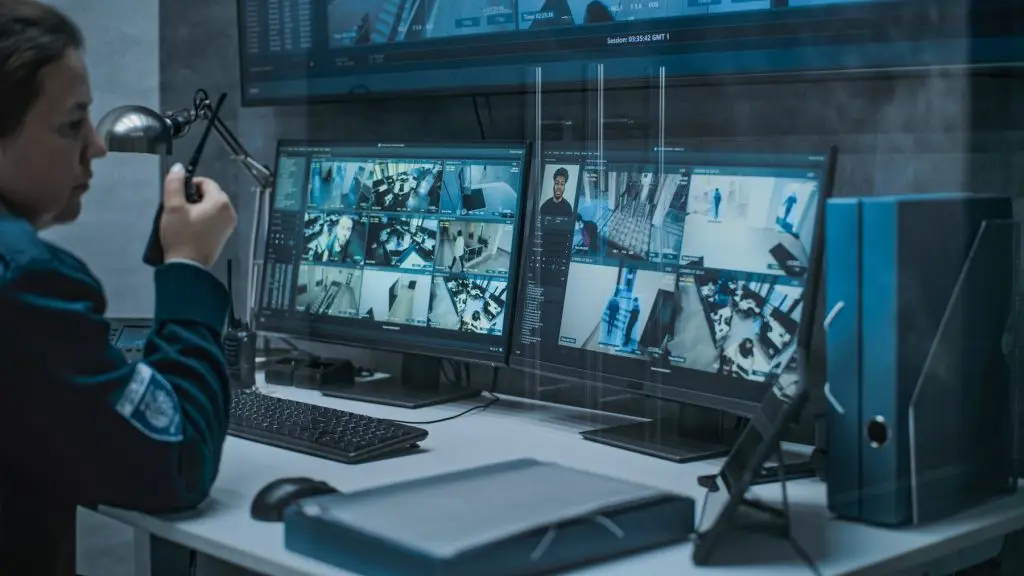
The guidance in these recent government directives can become embedded in social media platforms’ moderation and data-sharing practices. For example, these directives may indirectly result in weakened protections for vulnerable populations, while online speech about racial justice, immigration, gender equity, and critiques of military actions may carry heightened risk of being flagged, removed, or treated as evidence of criminal intent. The consequences compound for Black communities and other groups that the state has historically targeted under national security frameworks. People whose speech and associations are labeled by platforms and by government agencies as “extremist” generally do not receive any notice, opportunity to contest the designation, or access to meaningful legal remedies.93Scott, supra note 13; Bloch-Wehba, supra note 16. The following sections provide examples of marginalized groups that face heightened social media surveillance and subsequent criminalization by government agencies.
Modern political expression, organizing, and protest often occur via social media.94Note, Munirat Suleiman, Social Media Surveillance of the Black Lives Matter Movement and the Right to Privacy, Colum. L. Rev. (May 9, 2024), https://www.culawreview.org/journal/social-media-surveillance-of-the-black-lives-matter-movement-and-the-right-to-privacy; Chloé Lynn Nurik, Facebook and the Surveillance Assemblage: Policing Black Lives Matter Activists & Suppressing Dissent, 20 Surveillance & Soc’y 30–46 (2022), https://ojs.library.queensu.ca/index.php/surveillance-and-society/article/view/13398/10068. One study of Twitter/X activity related to Black Lives Matter found that greater levels of social media engagement were associated with larger subsequent daily protest volume, demonstrating a direct link between social media activism and real-world activism.95Munmun De Choudhury et al., Social Media Participation in an Activist Movement for Racial Equality, Proc Int AAAI Conf Weblogs Soc Media 92–101 (2016), https://pmc.ncbi.nlm.nih.gov/articles/PMC5565729/pdf/nihms891348.pdf.
Physical surveillance and police presence at protests threaten the exercise of civil rights, and law enforcement responses to certain protests are inequitable.96Sandhya Kajeepeta & Daniel K.N. Johnson, Police and Protests: The Inequity of Police Responses to Racial Justice Demonstrations, NAACP Legal Def. Fund, Thurgood Marshall Inst. (last visited Oct. 29, 2026), https://tminstituteldf.org/police-and-protests-the-inequity-of-police-responses-to-racial-justices-demonstrations/; Chaz Arnett, Black Lives Monitored, Uni. Md. Francis King Carey Sch. L., (2023), https://digitalcommons.law.umaryland.edu/cgi/viewcontent.cgi?article=2671&context=fac_pubs. In a 2023 study comparing police responses to racial justice protests and other protests during the summer of 2020, the Thurgood Marshall Institute found that police were more likely to be present, to have an escalated presence (e.g., riot gear and reinforcements from the National Guard), and to respond with arrests, projectiles, and chemical weapons at racial justice demonstrations.97Kajeepeta & Johnson, supra note 96.
In addition to physical surveillance and monitoring, government agencies also surveil the online activities of protesters and those deemed political dissidents via social media monitoring.98Arnett, supra note 96; Spencer Reynolds & José Guillermo Gutiérrez, Analysis & Opinion, Internal Atlanta Police Records Reveal Monitoring of ‘Cop City’ Opponents’ Political Activity, Brennan Ctr. Just. (Jul. 30, 2024), https://www.brennancenter.org/our-work/analysis-opinion/internal-atlanta-police-records-reveal-monitoring-cop-city-opponents. Evidence from a 2015 Freedom of Information Act (FOIA) request revealed that the U.S. Department of Homeland Security (DHS) was monitoring the social media posts and tracking the real-time movement of people who posted about their support of Black Lives Matter.99Nusrat Choudhury, The Government Is Watching #BlackLivesMatter, And It’s Not Okay, ACLU (Aug. 4, 2015) https://www.aclu.org/news/racial-justice/government-watching-blacklivesmatter-and-its-not-okay. Further information from FOIA requests and legal complaints revealed how law enforcement agencies across several states, along with federal agencies like DHS and the FBI, engaged in an elaborate, coordinated surveillance project targeting Black Lives Matter activists between 2014 and 2019.100Nurik, supra note 94. Federal and local law enforcement agencies worked in collaboration to monitor Black Lives Matter-related social media posts and the social media accounts of known protesters whom they deemed “threat actors.”101Complaint at 8, Color of Change v. U.S. Dep’t of Homeland Sec., No. 1:16-cv-08215 (S.D.N.Y. Oct. 20, 2016), https://ccrjustice.org/sites/default/files/attach/2016/10/COC%20Complaint%
20ECF%20Dkt%201_1.pdf (citing Brandon E. Patterson, Black Lives Matter Organizers Labeled as “Threat Actors” by Cybersecurity Firm, Mother Jones (Aug. 3, 2015), http://goo.gl/ZlDZhu). The surveillance project also included physical monitoring of protests and other community events, including video recordings from FBI aircrafts.102Id. During Black Lives Matter protests in 2020, evidence surfaced that law enforcement agencies were linking images of protesters with social media photos to facilitate arrests.103Arnett, supra note 96. In Portland, Oregon, federal intelligence officers created dossiers on Black Lives Matter protesters of interest by coupling social media surveillance with information about criminal history and travel history.104Spencer Reynolds & Faiza Patel, A New Vision for Domestic Intelligence, Brennan Ctr. Just. (Mar. 30, 2023), https://www.brennancenter.org/our-work/policy-solutions/new-vision-domestic-intelligence; Office of Intelligence and Analysis Operations in Portland, Ron Wyden United States Senator for Oregon, Portland Reports (Apr. 20, 2021), https://www.wyden.senate.gov/imo/media/doc/I&A%20and%20OGC%20Portland%20Reports.pdf. In other documented incidents, police officers infiltrated Black Lives Matter groups on Facebook by adopting fake online identities.105Nurik, supra note 94.
Law enforcement agencies have also worked with private data-mining and intelligence-gathering companies, such as Dataminr and Geofeedia, to surveil protesters.106Arnett, supra note 96; Nurik, supra note 94. Partnering with these companies has enabled law enforcement agencies to collect large amounts of social media data from X, Facebook, and Instagram to monitor and track the location of Black Lives Matter protesters.107Id. Geofeedia’s marketing materials even touted its work surveilling Black Lives Matter protesters in Ferguson, Missouri.108Nurik, supra note 94.
Social media surveillance has also become a primary tool of immigration enforcement in the United States.109Press Release, U.S. Citizenship & Immig. Serv., Making America Safe Again: U.S. Citizenship and Immigration Services End-of-Year Review Demonstrates Impact of Rigorous Immigration Crackdown (Dec. 12, 2025), https://www.uscis.gov/newsroom/news-releases/making-america-safe-again-us-citizenship-and-immigration-services-end-of-year-review-demonstrates. The U.S. Department of State expanded its social media surveillance practices in May 2019 by requiring visa applicants to disclose all social media identifiers from the past five years,110Press Release, Travel.State.Gov, U.S. Dep’t of State, Collection of Social Media Identifiers from U.S. Visa Applicants (last updated Jun. 4, 2019, archived by AILA), https://www.aila.org/aila-files/BD73A0BA-B9E0-4EFD-9367-8429A026AFFF/19060671.pdf?1697590575; Travel.State.Gov, U.S. Dep’t of State, Frequently Asked Questions on Social Media Identifiers in the DS-160 and DS-260 (Jun. 4, 2019), https://travel.state.gov/content/dam/visas/Enhanced%20Vetting/CA%20-%20FAQs%20on%20Social%20Media%20Collection%20-%206-4-2019%20(v.2).pdf; How Social Media Use Can Affect Legal Admissibility to the U.S., Justia (last reviewed Oct. 2026), https://www.justia.com/immigration/social-media-and-visa-applications/. affecting approximately 14.7 million people annually.111Id.; Brennan Ctr. Just., Timeline of Social Media Monitoring for Vetting by the Department of Homeland Security and the State Department (Jun. 25, 2019), https://www.brennancenter.org/our-work/research-reports/timeline-social-media-monitoring-vetting-department-homeland-security-and. In February 2026, U.S. Citizenship and Immigration Services was authorized to collect the same social media information from people already living in the country who apply for immigration benefits, including green cards, travel documents, asylum, and citizenship,112Emile Ayoub, Analysis & Opinion, Trump Administration Will Collect Social Media Handles from Legal Immigrants and U.S. Citizens, Brennan Ctr. Just. (Feb. 18, 2026), https://www.brennancenter.org/our-work/analysis-opinion/trump-administration-will-collect-social-media-handles-legal-immigrants; Media Note, U.S. Dep’t of State, Announcement of Expanded Screening and Vetting for Visa Applicants (Jun. 18, 2025), https://www.state.gov/releases/office-of-the-spokesperson/2025/06/announcement-of-expanded-screening-and-vetting-for-visa-applicants. affecting an estimated 3.6 million additional people annually.113Notice, U.S. Citizenship & Immig. Serv., Agency Information Collection Activities; New Collection: Generic Clearance for the Collection of Social Media Identifier(s) on Immigration Forms (Mar. 5, 2025), https://www.federalregister.gov/documents/2025/03/05/2025-03492/agency-information-collection-activities-new-collection-generic-clearance-for-the-collection-of; Brennan Ctr. Just., supra note 111; Ayoub, supra note 112. Under the new social media vetting processes, social media information is retained in immigration records, enabling ongoing monitoring of online behavior and social networks.114Alert, U.S. Citizenship & Immig. Serv., Update on USCIS’ Strengthened Screening and Vetting (Mar. 30, 2026), https://www.uscis.gov/newsroom/alerts/update-on-uscis-strengthened-screening-and-vetting; Brennan Ctr. Just., supra note 111.
In 2025, DHS directed officers to screen social media for undefined categories such as “anti-Americanism” and “antisemitic activity,” terms broad enough to encompass non-threatening political expression.115Rachel Levinson-Waldman & Melanie Geller, How DHS’s New Social Media Vetting Policies Threaten Free Speech, Brennan Ctr. Just. analysis (Jun. 20, 2025), https://www.brennancenter.org/our-work/analysis-opinion/how-dhss-new-social-media-vetting-policies-threaten-free-speech. Although there are no clear explanations of how these terms are operationalized in practice, they may serve as grounds for the denial or revocation of immigration benefits.116U.S. Citizenship & Immig. Serv., USCIS to Consider Anti-Americanism in Immigrant Benefit Requests, supra note 88; Levinson-Waldman & Geller, supra note 115.
The government’s own AI-assisted “Catch and Revoke” program scans tens of thousands of visa holders’ social media accounts, targeting and revoking the visas of individuals whose online activity it associates with disfavored causes.117Marc Caputo, Scoop: State Dept. to use AI to revoke visas of foreign students who appear “pro-Hamas”, (Mar. 6, 2025), https://www.axios.com/2025/03/06/state-department-ai-revoke-foreign-student-visas-hamas; Faiza Patel, U.S. AI-Driven “Catch and Revoke” Initiative Threatens First Amendment Rights, Brennan Ctr. Just. analysis (Mar. 20, 2025), https://www.brennancenter.org/our-work/analysis-opinion/us-ai-driven-catch-and-revoke-initiative-threatens-first-amendment-rights. The program explicitly punishes applicants for their public advocacy for or apparent sympathy toward political positions the administration opposes, including liking and sharing posts.118Caputo, supra note 117. A March 2025 State Department directive instructed officers to screenshot and permanently store relevant posts as grounds for visa ineligibility.119Id. By August 2025, the State Department had revoked more than 6,000 student visas, with a spokesperson attributing 200 to 300 revocations to alleged “support for terrorism,” a broad and contested designation that was echoed in NSPM-7.120Exec. Order No. 14161, 90 Fed. Reg. 8451 (Jan. 20, 2025), https://www.federalregister.gov/documents/2025/01/30/2025-02009/protecting-the-united-states-from-foreign-terrorists-and-other-national-security-and-public-safety; Natalie Schwartz, State Department has revoked over 6,000 student visas this year, Higher Ed Dive (Aug. 19, 2025), https://www.highereddive.com/news/state-departmnt-revoked-6000-student-visas/758081/; Presidential Memoranda, supra note 86.
People subject to this surveillance, including immigrants,121Christopher Muhawe, The (In)visible Immigrant’s Privacy, 9 Geo. L. Tech. Rev. 290 (2025), https://georgetownlawtechreview.org/the-invisible-immigrants-privacy/GLTR-05-2025/. visa holders, and asylum seekers,122Tamy Guberek et al., Keeping a Low Profile?: Technology, Risk and Privacy among Undocumented Immigrants, 114 CHI ‘18: Proceedings of the 2018 CHI Conference on Human Factors in Computing Systems 1–15 (2018), https://doi.org/10.1145/3173574.3173688. may reduce their online participation, avoid political expression, and withdraw from community organizing out of fear that their digital activity will be used against them.123Id.; Muhawe, supra note 121. In effect, this is a continuation and expansion of the racialized retaliatory state that weaponizes immigration law to criminalize dissent.124Karla McKanders, The Racialized Retaliatory State: Weaponizing Immigration Law to Criminalize Dissent, 32 Wm. & Mary J. Race, Gender, & Soc. Just. 63 (2025), https://scholarship.law.wm.edu/wmjowl/vol32/iss1/5; Alina Das, Deportation and Dissent: Protecting the Voices of the Immigrant Rights Movement, 65 N.Y.L. Sch. L. Rev. 225 (2020-2021), https://digitalcommons.nyls.edu/cgi/viewcontent.cgi?article=1758&context=nyls_law_review; Immigrant Rights Voices Database (last visited Oct. 29, 2026), https://www.immigrantrightsvoices.org/#/. For communities whose participation in civic and political life already faces structural barriers, the chilling effect of surveillance—despite having no suspected criminal activity—compounds existing inequities and threatens democratic values and principles.
Traditional law enforcement criminal investigation tactics have also shifted in response to the evolving digital landscape, with disproportionate impacts on Black youth. Law enforcement agencies now frequently monitor social media activity to gather evidence for criminal investigations, leading scholars and reporters to question whether online surveillance is “the new stop-and-frisk.”125Nurik, supra note 94; Patton et al., supra note 31. One 2016 study found that forty-eight percent of all evidence in indictment documents in New York City was based on social media activity or communication.126Patton et al., supra note 31. Much like physical policing tactics, such as stop-and-frisk, this social media surveillance is not race neutral: Black youth appear to face a heightened risk of racialized social media surveillance by law enforcement and subsequent arrest based on online behavior.127Id.
The disproportionate targeting of Black youth due to their online behavior is starkly apparent in “gang policing” programs. Law enforcement agencies may use social media posts, photos, interactions, and connections as the basis for assuming real-world gang membership or criminal activity.128Id. Racial profiling is embedded in the vague criteria for alleged gang membership,iiSubjective criteria for entry into gang databases may include personal associations (interacting on social media or appearing in photographs with a person who is already in a gang database), geographic profiling (being physically present in a “known gang location” such as an entire public housing development), and cultural profiling (attending certain community events, wearing certain clothing or colors, listening to certain music, or even using certain emojis online). resulting in stark racialized disparities in gang databases across the country.129Justice in Public Safety Project, NAACP Legal Def. Fund, The NYPD Gang Database, Explained (last visited Oct. 29, 2026), https://www.naacpldf.org/case-issue/nypd-gang-database-policing-tactics/. For example, ninety-nine percent of people in New York City’s gang database are Black or Hispanic.130Press Release, Dep’t of Invest., City of New York, DOI’s Office of the Inspector General for the NYPD Issues Report Examining NYPD’s Use and Operation of the Criminal Group Database (Apr. 18, 2023), https://www.nyc.gov/assets/doi/reports/pdf/2023/16CGDRpt.Release04.18.2023.pdf. In Operation Crew Cut, one prominent example of police monitoring social media to target and criminalize young Black people, NYPD officers used years-old Facebook photos and likes as evidence for criminal conspiracy charges.131Alexandra Mateescu et al., Social Media Surveillance and Law Enforcement, Data & Civil Rights: A New Era of Policing & Just. (Oct. 27, 2015), https://datasociety.net/wp-content/uploads/2015/10/Social_Media_Surveillance_and_Law_Enforcement.pdf. As part of this operation, the NYPD used a young Black man’s social media activity to charge him with attempted murder and pressured him to accept a plea deal.132Id. He spent nineteen months in jail on Rikers Island, including nine months in solitary confinement, before a judge ultimately dismissed the case.133Id.; Sara Robinson, When a Facebook Like Lands You in Jail, Brennan Ctr. Just. analysis (Jul. 6, 2018), https://www.brennancenter.org/our-work/analysis-opinion/when-facebook-lands-you-jail.
The surveillance of Black people and other marginalized communities through social media reflects patterns that predate the digital age. In the 1950s through 1970s, the FBI’s COINTELPRO used the tools of its era to monitor, infiltrate, and disrupt Black political groups that organized for Black freedom.134Gupta et al., supra note 17. After September 11, 2001, government leaders deployed surveillance authorities against Muslim communities on the basis of religion and national origin, without individualized suspicion and with lasting consequences for political participation and civil liberties.135Id. While the technology has changed fundamentally, the targets of state surveillance disproportionately remain marginalized communities.
Defend the right of all people to speak freely and protest, safeguarding our multiracial democracy against the suppression of political participation;
Prohibit funding for the abusive domestic intelligence surveillance of constitutionally protected activity, including lawful protest activity and online political expression;136Press Release, supra note 89.
Restrict data-sharing practices between third parties and law enforcement agencies, and enact accountability measures for violations of protections;137Justice in Public Safety Project, NAACP Legal Def. Fund, Ending State and Local Complicity in DHS Violence (last visited Oct. 29, 2026), https://www.naacpldf.org/case-issue/end-state-and-local-involvement-in-dhs-abuses-violence/.
Eliminate policing programs that criminalize Black people for their social media activity or that input social media activity into predictive policing algorithms; and
Demand transparency and federal enforcement of civil rights laws, including for AI systems.
The present moment is distinguished not by the existence of harmful surveillance, but by its expansion. Platform data collection, content moderation, commercial data markets, and law enforcement monitoring operate as a single interlocking system, with each layer feeding the others. A post about racial justice can be removed as hate speech, flagged in a content moderation record, and made available to law enforcement through mechanisms that operate automatically, often without notice or meaningful recourse.
This convergence represents a structure whose design and consequences are neither accidental nor inevitable.138Earl et al., supra note 31; Bloch-Wehba, supra note 16. When Black activists know their organizing is monitored, when immigrants self-censor out of fear that a post will cost them their legal status, and when Black women disengage from platforms where their speech is targeted and their harassment goes unaddressed, the losses are collective. A democracy that surveils and criminalizes its most politically marginalized communities into silence is not living up to its stated values.139McKanders, supra note 124. The legal frameworks that enable warrantless data-sharing, the platform incentives that drive surveillance-compatible design, and the government pressure that shapes what counts as dangerous speech are products of decisions that must be challenged and changed. That work is already underway in courtrooms, in policy advocacy, and in the communities that have refused to accept criminalization as a condition of political and public life. Racial justice is at the center of this fight.