One of the ways we engage new ideas is by hosting TMI Labs: Forums where social scientists, advocates, and peers can discuss strategies to address today’s civil rights challenges.
This convening was jointly hosted by TMI and LDF’s Justice in Public Safety Project. The convening brought together community partners, practitioners, and experts to engage in cross-jurisdictional learning on effective and sustainable non-policing alternative responder models. The aim was to create a space that centered the alternative response conversation around the experiences and expertise of Black people who have been directly impacted by the harms of policing and who have been developing alternative safety programs for decades. Topics included messaging and misinformation, dispatching decisions, and public safety funding models.

This Lab convened education experts to identify: the requirements in K-12 education that would increase cultural competency, racial inclusion, and positive educational outcomes; the best assessment tools and practices to select students for competitive K-12 educational resources; and the most effective ways of fostering racial diversity in higher education by improving K-12 education equity.

At this Roundtable, researchers, policy advocates, litigators, and community organizers collaborated on strategies to realize the full and unequivocal right to a fair vote for Black and Brown residents of America’s southern region. Topics included client-centered voting rights advocacy, voting rights restoration, AI/emerging technology’s impact on election misinformation, and the power of local elections. Participants also discussed ways for attendees to work collaboratively throughout the region to share knowledge, strategies and new ideas around pursuing full access to the ballot. This lab was preceded by community engagement in the Nashville area, including a voter registration drive and a keynote address.
This TMI Lab discussed strategies to address water and wastewater crises in Black communities. Topics included an overview of water and sewer crises in Black communities, advocacy and organizing for water as a human right, litigation strategies to address water crises, water laws and policies, and water regionalization and privatization.
In this TMI Lab, the Institute collaborated on strategies to realize Brown’s vision for equalizing access to high-quality educational opportunities for Black and low-income students, especially those who are LGBTQ+, live with disabilities or experience other marginalized identities.
During this TMI Lab, paths were carved out toward a system of public housing that mitigates today’s problems and innovates to meet current and future needs. This Lab was guided by a shared commitment to expanding government-owned public housing to provide low-income Americans access to safe, quality, and affordable housing.
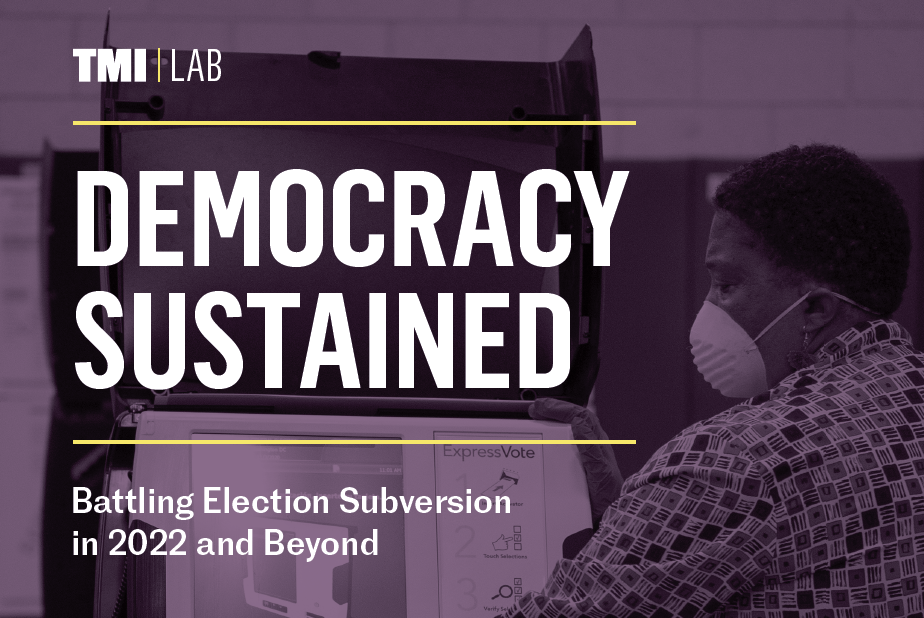
This TMI Lab fostered knowledge-sharing on the threat of election subversion. Throughout the day the Institute facilitated strategic thinking at the federal, state, and local levels and discussed the best approaches to combat election sabotage, protect election officials and workers, and strengthen election infrastructure against anti-democratic threats.
The Institute convened social scientists and tax policy experts to discuss elements of American tax policy that disadvantage Black and low-income Americans.

This mini-Lab delved into lessons learned working in the environmental racism space and discussed opportunities for LDF to deepen our work in assisting Black communities facing environmental challenges.
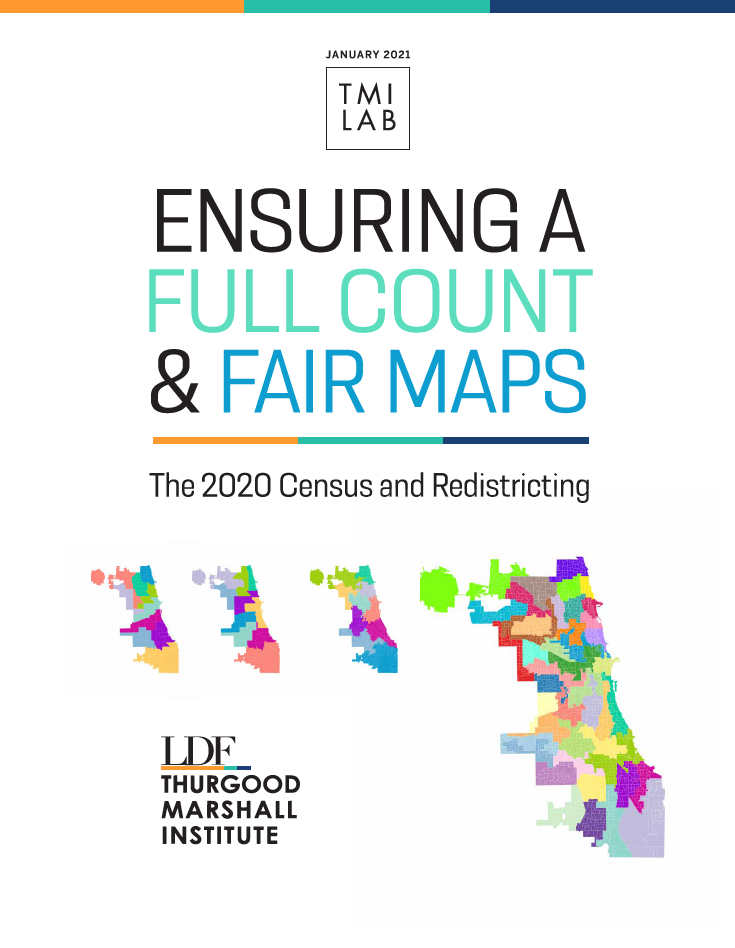
This TMI Lab explored the problems of the 2020 Census, the challenges of achieving fair districts where people of color can elect candidates of their choice, the role of the community in the redistricting process, and the need to end prison-based gerrymandering.
The Institute facilitated an exchange of strategies among voting rights advocates at the federal, state, and local levels about the best approaches to maximize voter participation and combat voter suppression during the COVID-19 pandemic.