Toxic beauty—the presence of harmful chemicals in common beauty products—is a public health crisis rooted in systemic racism. In this episode of Justice Above All, guests discuss how various beauty products marketed to Black women contain toxic chemicals that contribute to serious health disparities. Guests highlight how racialized beauty standards and the marketing and availability of certain cosmetics make Black women more vulnerable to toxic beauty products and associated health risks, including cancer, reproductive challenges, hair loss, and more. By offering listeners tangible strategies to protect their health while pushing for a safer, more equitable beauty industry, the guests aim to dismantle the racialized harms of toxic beauty.

Research Manager, Thurgood Marshall Institute

Assistant Counsel and Manager of Professional Development, Legal Defense Fund

Director of Programs, Black Women for Wellness
Content Creator, "Fast Black History," and Author, "Black History Is Your History"
The use of cosmetics varies widely by race and ethnicity across multiple product categories, including skin care and hair care. On average, Black women purchase nine times more hair products and are nearly twice as likely as white women to use hair products with high hazard scores over the course of two days.
Furthermore, one study of over 4,000 personal care products marketed to Black women found that only twenty-one percent were rated as low hazard, and one in twenty products were rated as highly hazardous. The risk of exposure to concerning chemicals in cosmetics is therefore not evenly distributed.
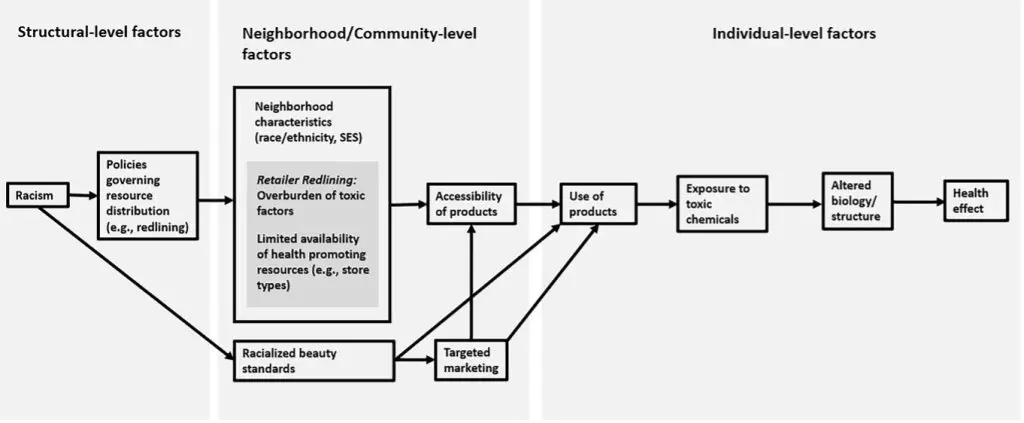
Given the potential adverse health effects, there is an urgent need for both greater scrutiny of these widely and regularly used products and greater government regulation to protect Black women’s health and safety.
Products that are used to straighten or relax hair texture have been found to contain a range of endocrine-disrupting chemicals, metals, and formaldehyde.
To create hair color, products combine intermediates such as aromatic amines and phenols with hydrogen peroxide. Darker colors are formed by using higher concentrations of intermediates. Some hair dyes also contain coal tar, a petroleum-based chemical that is a known carcinogen.
Although “natural” hair products presumably have fewer toxic ingredients than traditional chemical straighteners, these products may still contain potentially harmful ingredients such as endocrine-disrupting chemicals and fragrances.
Synthetic hair is typically composed of nonrenewable plastic fibers and modacrylic fiber. Modacrylic fiber contains acrylonitrile and vinyl chloride, both of which are toxic to humans. Synthetic extensions also contain flame-retardant fibers, which have been linked to cancer and reproductive organ toxicity.
Black Women for Wellness works to protect the health and well-being of Black women and girls by addressing systemic inequities in the beauty industry. Their website offers a beauty justice newsletter, beauty-related webinars, and reports about the environmental injustice of beauty.
This page provides information on the FDA’s authority to regulate cosmetics, its labeling and ingredient requirements and other standards that the cosmetics industry must follow, and international activities related to cosmetics such as which products can be imported and exported.
Consumers and health professionals can report complaints or adverse events related to cosmetic products (such as illness, allergic reaction, rash, irritation, scarring, or hair loss) directly to the FDA. Learn how to submit an electronic complaint at the link below.