
Safety Is What We Carry: Approaches to Violence Prevention
Black communities hold the intergenerational wisdom to address community violence and deliver safety without relying on punishment. In this episode of Justice Above All, guests explore approaches to violence prevention that are rooted not in punishment, but rather in Black communities’ wisdom around safety, accountability, resistance, and healing. Guests spotlight the Safe Streets program in Baltimore, Maryland, as one example of an evidence-based violence interruption model. This episode contextualizes Safe Streets and similar programs as part of the long history of Black people’s resistance to the oppressive carceral state, emphasizing the notion that “we keep us safe.”
Senior Researcher and Statistician, Thurgood Marshall Institute
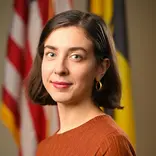
Stefanie Mavronis
Director, City of Baltimore Mayor’s Office of Neighborhood Safety and Engagement

Alex Long
Site Supervisor, Safe Streets McElderry Park

MarTaze Gaines
Senior Community Organizer, Legal Defense Fund
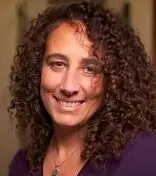
Andrea Ritchie
Organizer, Author, and Police Misconduct Attorney
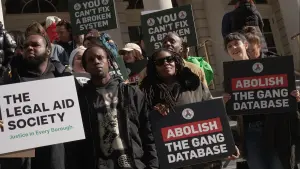
WE KEEP US SAFE: The Cure Violence Approach
Cure Violence Global trains community partners and credible messengers to detect and interrupt conflict without police intervention. This model prioritizes community safety and health.
SAFE STREETS BALTIMORE
Safe Streets Baltimore, a program established in 2007 and housed within the Mayor’s Office of Neighborhood Safety and Engagement (MONSE), conducts community outreach, public education, conflict mediation, and violence interruption in ten neighborhoods throughout the city.
As of September 13, 2025, Safe Streets violence interrupters had mediated more than 1,130 potentially violent conflicts.
An evaluation of Safe Streets from 2007 to 2022 conducted by epidemiologists from the Johns Hopkins Bloomberg School of Public Health found that:
Focusing on five longer-running sites, a Safe Streets site was associated with a thirty-two percent reduction in homicides on average.
Eight sites had program-related reductions in nonfatal shootings, ranging from twenty-nine percent to eighty-four percent.
Every $1.00 invested in Safe Streets yielded $7.20 to $19.20 in social and economic benefits.
On March 25, 2026, the neighborhood of Sandtown-Winchester, which is serviced by Safe Streets, achieved over 365 days without a homicide for the first time since 2016. In the prior year, Safe Streets violence interrupters conducted more than seventy successful mediations to prevent potentially violent conflicts.
Since December 2020, eight Safe Streets sites throughout Baltimore have gone over 365 days without a homicide.